Dry cleaning at home may come to mind when a suit picks up a small mark before work in Kuwait, or when a traditional garment needs attention before an occasion. The care label and the type of stain determine whether a home refresh is appropriate.
This guide explains what a home kit may do, what it cannot replace, and when to ask a laundry to assess the garment.
Can you do dry cleaning at home?
You may air or use a suitable home kit to refresh lightly worn clothes if the garment label and product instructions permit. Some light odours or surface marks may improve, but a home kit does not reproduce a laundry’s solvent-cleaning process. Ask a laundry about delicate pieces and deep stains.
What professional dry cleaning means
Traditional professional dry cleaning uses a specialised machine and solvent rather than water as the main cleaning liquid. Some home kits use a sheet, a bag and a dryer cycle according to the product instructions. That is a limited refresh, not the same treatment as a professional solvent process.
Read the dry cleaning guide before choosing a partner laundry through the Otti app. The service available depends on the laundry and the garment.
When a home refresh may help—and when to ask a laundry
- Work suit with a light odour: Air it in a clean place away from direct sunlight and read the label before using heat or any product. Ask a laundry if a stain or odour persists.
- Bisht before a wedding: A bisht is a traditional ceremonial cloak, often with decorative trim. Check the care label and consult a laundry about delicate stitching or visible marks.
- Embroidered abaya after an occasion: An abaya is a loose outer garment; the lining and decoration can have different needs. Avoid rubbing embroidery or applying an untested product.
- Trying a home dry cleaning kit: Use it only when the garment label, product and appliance instructions all permit the process. If heat is prohibited or the directions are unclear, do not start the cycle.
- Ink on a shirt: Do not place a stained piece in a dryer just to freshen it. Read remove ink from clothes before choosing a partner laundry through the Otti app.
Home care and laundry service compared
The table describes general limits, not a substitute for the care label or the product instructions. Lining and decoration may need assessment as well as the main fabric.
| Situation | What may be possible at home | When to consult a laundry |
|---|---|---|
| Light odour after limited wear | Air the garment if its instructions allow | Persistent smell or visible soil |
| Home refreshing kit | Follow garment, product and appliance labels | Heat prohibited or instructions unclear |
| Oil or an older stain | Avoid rubbing, heat and random products | Explain the stain and previous treatments |
| Bisht or embroidered abaya | Air and store according to the label | Delicate trim or visible stains |
| Structured or lined suit | Check the complete garment’s instructions | Marks or construction need assessment |
Compare dry cleaning vs washing before choosing a partner laundry through the Otti app.
How to book garment care through the Otti app
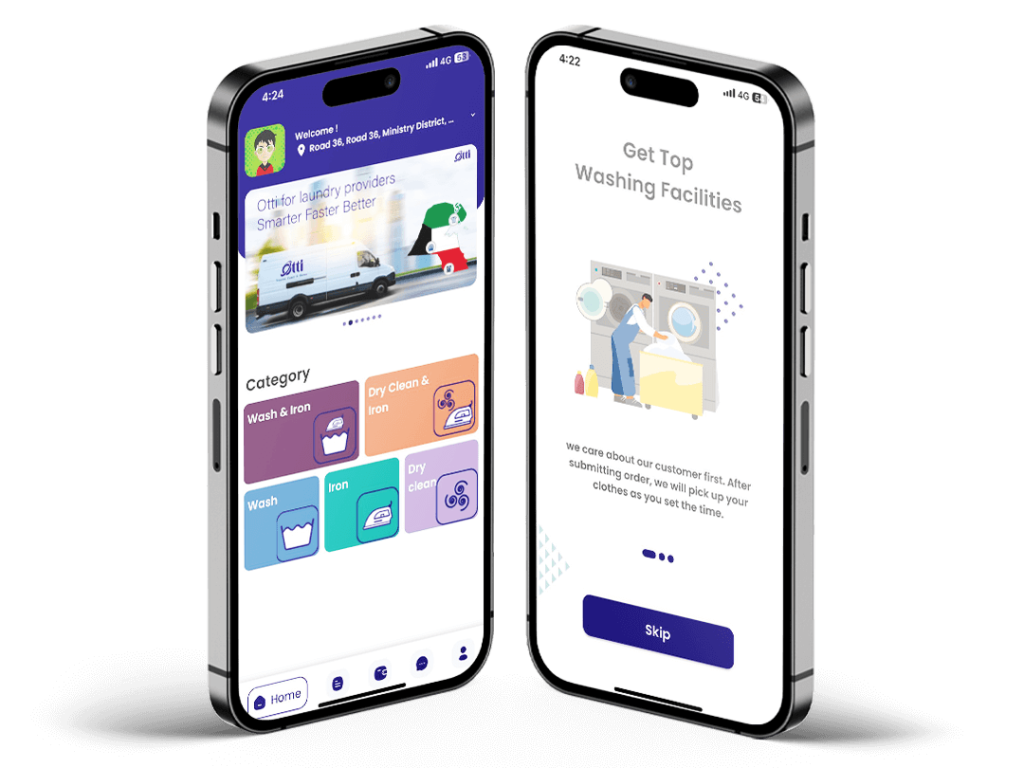
The Otti app connects customers with partner laundries in Kuwait; it is not a laundry and does not clean garments itself. Choose a partner serving your area:
- Open the app at any time and enter your address.
- Choose a partner laundry based on available services and slots.
- Select the garment and service. The price appears in the app before you confirm your order.
- Choose a collection slot from the laundry’s schedule, or select “Request Driver”.
- The partner laundry’s representative collects from the door and returns the garment. Track the order and pay online or with the wallet.
Tell the laundry about the fabric, lining, decoration, stains and any product already used. Check that your chosen service is available.
Why choose from a network of partner laundries?
A bisht, suit and embroidered abaya may each need a different assessment. The Otti app connects you to partner laundries rather than operating as a single laundry, so you can choose according to services and slots in your area.
If dry cleaning at home is not appropriate, check the selected laundry’s service and share the care label and stain details. The possible treatment and result depend on the garment’s condition and the laundry’s assessment.
Mistakes to avoid with DIY dry cleaning
- Do not ignore the care label or put a garment in a dryer when heat is prohibited.
- Do not iron or heat a visible stain before assessment; heat may make some marks harder to treat.
- Do not rub embroidery or apply stain remover to delicate fabric without checking the instructions.
- Never mix cleaners or put professional solvents or flammable liquids into a home appliance.
- Do not assume steam alone removes every type of soil: it may relax some creases when appropriate but is not a substitute for stain treatment.
Stop if the fabric changes colour or texture and tell the laundry what you have already used.
Care before and after a home refresh
Check pockets, lining and the care label first. For lightly worn garments, begin by airing them in an appropriate place away from strong sunlight. If using a home kit, follow its instructions and do not include a bisht or structured jacket unless all relevant labels permit the process.
Make sure the garment is dry before storage, then use a suitable hanger and breathable cover. If a mark or smell persists, avoid repeated treatments with different products; explain what happened to the laundry so it can assess the piece.
Garment care prices through the Otti app
If dry cleaning at home is unsuitable, the price appears in the app before you confirm your order and depends on the item and service. Read about laundry prices when choosing a partner laundry through the Otti app.
💜 Wallet in the Otti app
When you top up your wallet in the Otti app, you get a 25% extra bonus, and you can use your balance to order from any laundry in the app with no commitment to just one.
Frequently asked questions about home garment care
Do home dry-cleaning kits work?
Some kits can freshen lightly worn garments and reduce light odours or creases; a separate spot treatment may help with a small surface mark. Results and instructions vary by product. They do not replicate a professional solvent process. Check both garment and kit labels, and avoid heat if the garment label forbids it.
Can I clean a bisht at home?
A bisht is a traditional cloak, often with decorative trim. You may air it gently if its care instructions permit, but heat or home products can affect delicate fabric and stitching. Do not put it in a bag or dryer without clear permission on the label. Ask a laundry about stains or unclear instructions.
What is the difference between a home kit and a laundry?
A home kit may refresh a lightly worn garment according to its instructions, but it does not reproduce traditional professional dry cleaning. That process uses specialised machines and solvents, with treatment selected for the fabric and label. Services vary between laundries, and no method removes every stain in every garment.
Which items can I refresh at home?
Lightly worn items may be aired in a clean, ventilated space if their care instructions allow. Before using a home kit, check the garment, product and appliance instructions together. Do not assume a structured suit, delicate lining or embroidered piece can go into a dryer simply because it can be hung up.
How do I remove smoke smell from a suit at home?
Hang the suit in a clean, well-ventilated place away from direct sunlight and check its care label before applying any product. Airing may reduce a light smell, but persistent odour or visible marks need assessment by a laundry. Avoid masking the smell with fragrance or tumble drying without label permission.
Can I iron a wool suit at home?
Read the suit label first: suitable temperature and treatment can vary with the wool, lining and construction. If ironing is allowed, follow the stated setting and the maker’s instructions for protecting the fabric, testing an inconspicuous area first. If instructions are unclear or the suit is delicate, consult a laundry.
What mistakes ruin a garment when you try at home?
Ignoring the care label, heating a stain, rubbing embroidery or applying an unsuitable product can damage a garment. Never mix cleaning chemicals or put professional solvents or flammable liquids in a home appliance. If colour changes or the stain remains, stop and tell the laundry what you already used.
Tried a home refresh and it did not work? Choose a partner laundry through the Otti app to assess your garment.
Questions? Message us on WhatsApp +965 5656 0404