
The phrase dry cleaning repeats inside laundry shops and on the care labels sewn into garments, yet few know what it actually means: cleaning without water, where chemical solvents take the place of water and detergent, so even sensitive fabrics keep their shape and their measure away from an ordinary water cycle.
This page answers the question in full: how the shop runs the cycle step by step, which pieces need it and which are fine with a normal wash, where the home attempt stops being safe, and how to book it from the Otti app without a single trip. In short, dry cleaning is a channel, not a luxury.
What is dry cleaning, and how does it differ from a normal wash?
dry cleaning is a specialised method of cleaning clothes without water: the machine relies on chemical solvents instead of water and traditional detergents, which is why it suits the sensitive fabrics that lose shape or measure inside a water cycle.
The core difference is simple: a normal wash rubs the fibres with water and detergent, while the solvent dissolves soil and grease without gripping or stretching the fibres, so the piece leaves with the same measure and structure it came in with.
And that is exactly why the dry-clean symbol sits on the care labels of silk, wool and embroidery: the manufacturer itself says the water channel is a risk on these pieces.
How does the shop run the water-free cycle step by step?
The dry cleaning cycle inside the shop is six controlled steps, and each step preserves something in the piece:
- Sort and inspect: classification by fabric type, colour and soil level, with pockets, buttons and small parts checked.
- Pre-treat stains: stubborn spots are treated by hand with agents that dissolve grease before the cycle starts.
- Enter the cleaning machine: a machine that resembles a washer but runs on solvent instead of water.
- Clean and dry in the same machine: evaporating the solvent after cleaning prevents shrinkage and holds the shape.
- Press and quality-check: careful pressing or steaming, then an inspection for stain removal and garment integrity.
- Wrap and deliver: packaging that preserves cleanliness and quality until handover.
Because drying happens inside the same machine, the cycle cuts the long waiting that line-drying imposes on heavy pieces.
What does solvent cleaning do for sensitive fabrics?
- Protects delicate fibres: silk, wool and cashmere come out without shrinkage and without losing softness.
- Effective on grease stains: solvents dissolve oils and fats with an efficiency a normal wash cannot match.
- Holds colour and shape: the chance of fading or a changed cut is far lower than in a water cycle.
- Cares for embroidery and trim: threads and decorations are never exposed to hard friction inside the cycle.
- Reduces wear: without heavy friction the piece stays in better condition for longer.
- Better sanitising: solvent heat and the pressing stage reduce germs and bacteria.
That is why the water-free channel is not a luxury for premium pieces only, but the original route for every garment whose label reads: no water.
Which pieces need the water-free channel, and which are fine at home?
The decision table shortens the whole file: read the care label first, then compare:
| Piece | Safe channel | Reason |
|---|---|---|
| Silk | Dry clean | Water strips the sheen and stiffens fibres |
| Wool and cashmere | Dry clean before storage | Warm water costs measure and structure |
| Embroidery and gowns | Dry clean | Hard friction loosens embroidery threads |
| Suits and coats | Dry clean with steam press | Preserves the cut, the shoulder and the collar |
| Lined jackets | Dry clean per the label | Water clumps the padding and ruins insulation |
| Everyday cotton | A normal wash suffices | Fibres tolerate water and spin |
The rule in two lines: one piece in the wrong channel costs more than a full season of dry cleaning, and the label inside the garment is the first judge before any table.
Can dry cleaning be done at home, and where is the line?
Searches for cleaning sensitive pieces at home return bold recipes, but the home is a ventilation and maintenance channel, not a full cleaning channel:
- Shade-airing after use so odours leave before storage.
- Soft brushing along the nap to lift dust from wool and coats.
- Local wiping with a wrung cloth for leather, never soaking.
- Refresh sprays postpone odour briefly; they do not clean the piece.
Any grease stain or fixed odour means the piece has moved to the shop channel; and whoever likes the full price picture before confirming can check the Otti laundry prices before experimenting.
How do you book sensitive pieces through the Otti app?
The order is a short journey from screen to door:
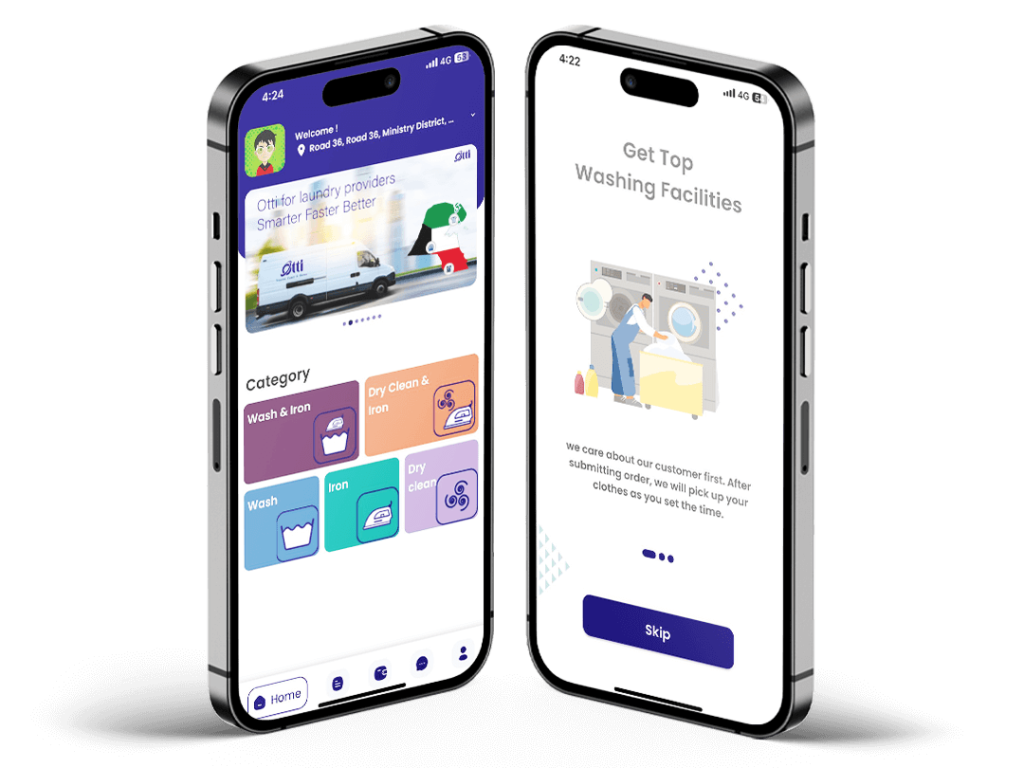
- You open the app and it lists the laundries serving your address, with the nearest options explained on the laundry near me page.
- You pick the water-free service for sensitive pieces inside the same order.
- You schedule the pickup and delivery window that fits your week.
- You see the full price before confirming, and pay online, from the wallet, or on delivery.
And for a regular wash rhythm, the monthly laundry subscription turns the sensitive-piece cycle into a fixed appointment without repeated booking.
So the order needs no trip and no phone call: the screen carries the whole cycle from its first step to its last.
Dry cleaning for abayas and Kuwaiti pieces: what changes?
The Kuwaiti closet adds pieces that tolerate no guesswork: the embroidered abaya, the white ghitra, and the dishdasha where any fading shows instantly.
The embroidered abaya runs on dry cleaning without debate: embroidery threads lose their grip inside a water cycle, and gowns that share the same ruling are explained in the wedding dress laundry route.
The white ghitra and shemagh, meanwhile, are fine with an orderly wash sorted away from the daily basket, so the white stays white from the first day of the season to its last.
How long does the solvent cycle take, and when does express shorten it?
A standard cycle takes between 24 and 48 hours depending on seasonal pressure, and the app shows the expected window before confirmation.
For a piece that must arrive before a near date, the express laundry route gives priority in the queue without changing the safe channel, and the same time flexibility is explained in the 24 hour laundry service.
So the known time before confirmation is not just a number on screen but a clearer decision: you know where your piece is and when it returns before you start.
Frequently asked questions about dry cleaning
What is the difference between the solvent channel and a normal wash?
The normal route is water, detergent and friction; dry cleaning runs on solvents without water, which is why it is the channel for pieces that lose shape or measure inside a water cycle.
Is solvent cleaning safe for every fabric?
Safe for most sensitive fabrics such as silk and wool, while a few fabrics carry special care that the label inside the piece defines before any cycle.
Does the solvent cycle remove every stain?
It is superior on grease and oils specifically; some stains need manual pre-treatment before the cycle, which is why the note is documented inside the Otti order.
Does the piece shrink in a solvent cycle?
In a professional shop with sound equipment the shrinkage risk is very low; shrinkage originates in warm water and hard drying, and the solvent works without either.
What does the term dry clean mean on a label?
It is the common commercial name for dry cleaning: cleaning with solvents instead of water, the same cycle this page explains.
Can a solvent cycle run in a home washing machine?
No; some machines offer a gentle cycle only, while a solvent cycle needs a dedicated shop machine, and mixing the two channels loses the piece.
How often should a coat go to the shop in a season?
Practically twice: mid-season at a stain or odour, and always before storage, because the measure is oils and odours, not wash count.
Does the water-free channel cover sofas and furnishings?
The in-app order focuses on garments and pieces; furnishings have add-on services that the chosen laundry screen clarifies before confirmation.
Is the price visible before confirming the order?
Yes; the service and delivery cost for your address appear in full before payment, with no fees surfacing later.
Your sensitive piece deserves the water-free channel from the first time
Order your dry-clean pieces with Otti now
Or reach us directly on WhatsApp: +965 5656 0404
Get the app (Android opens Google Play, iPhone opens App Store): onelink.to/w5pezq