Sorting a laundry basket in Kuwait after a busy week brings dry cleaning vs washing down to one question: which items go into your washing machine, and which ones shrink or lose their tailoring in water? Between suits, cotton shirts, woollens and occasion wear, one wrong cycle can ruin a garment.
Below is a comparison table by fabric, a clear guide to care label symbols, and how to book either service from partner laundries in Kuwait.
Dry cleaning vs washing: when should you choose dry cleaning?
Choose dry cleaning for wool, silk, embellished pieces or anything labelled Dry Clean Only, and use regular washing for cotton and everyday clothes that handle water and agitation without shrinking or fading.
How a regular washing machine cleans fabric
Regular washing uses water, detergent, drum agitation and spinning to dissolve sweat, salts and dust from sturdy cotton shirts and casual wear.
How dry cleaning protects delicate fibres
Professional dry cleaners use a water-free solvent inside a closed machine to lift oils without swelling delicate fibres, keeping tailored shoulders and weaves intact. For full process details, see our guide to dry cleaning in Kuwait.
When your wardrobe in Kuwait needs each method
Households in Kuwait mix business attire with traditional Gulf garments across hot summers and cool winters:
- Cotton dishdasha vs winter wool dishdasha: A dishdasha (the traditional ankle-length men’s robe worn daily in Kuwait) in summer cotton handles machine washing well, whereas a winter wool dishdasha shrinks in water and needs dry cleaning.
- Embroidered abaya and evening wear: An abaya (the loose outer cloak worn by women across the Gulf) with beadwork or embroidery can snag in a drum wash, like gowns in our guide to wedding dress dry cleaning.
- White work shirts vs tailored suits: Cotton office shirts need water washing for collar sweat, while suit jackets have chest canvas and shoulder pads that warp when soaked.
- Ceremonial bisht and Dry Clean Only pieces: A bisht (the formal wool cloak edged with gold zari thread worn over a dishdasha), silk items and anything stamped Dry Clean Only belong with specialist dry cleaners.
Comparison table: fabric, method and risk if you choose wrongly
Check this table whenever weighing dry cleaning vs washing before loading your washing machine or booking pickup:
| Garment or fabric | Right method | Why it suits | Risk if wrong |
|---|---|---|---|
| Summer cotton dishdasha & shirts | Regular washing | Water flushes sweat, salts and dust | Solvent is weaker on collar sweat |
| Winter wool dishdasha & cashmere | Dry cleaning | Cleans oils without locking wool scales | Shrunk sleeves and matted texture |
| Business suit & lined blazer | Dry cleaning | Keeps chest canvas and pads flat | Bubbled lapels and drooping shoulders |
| Embroidered abaya & beaded wear | Dry cleaning | Avoids heavy wet spin on threads | Loose beads, pulled seams and dye bleed |
| Ceremonial bisht with zari trim | Dry cleaning | Protects fine wool and metallic edging | Tarnished zari and creased drape |
| Natural silk blouses & chiffon | Dry cleaning | Prevents water rings and colour loss | Watermarks, faded dye and pulled seams |
| Casual cottons & sportswear | Regular washing | Built for water and odour removal | Solvent can weaken elastic trims |
Key care label symbols
- Washtub icon: Water wash up to the temperature shown; a hand icon means hand wash.
- Circle icon (plain or P/F): Safe for dry cleaning with the indicated solvent.
- “Dry Clean Only”: Do not test in water at home.
- Circle crossed with X: Do not dry clean; solvent may harm prints or coatings.
How to book dry cleaning or washing in the Otti app
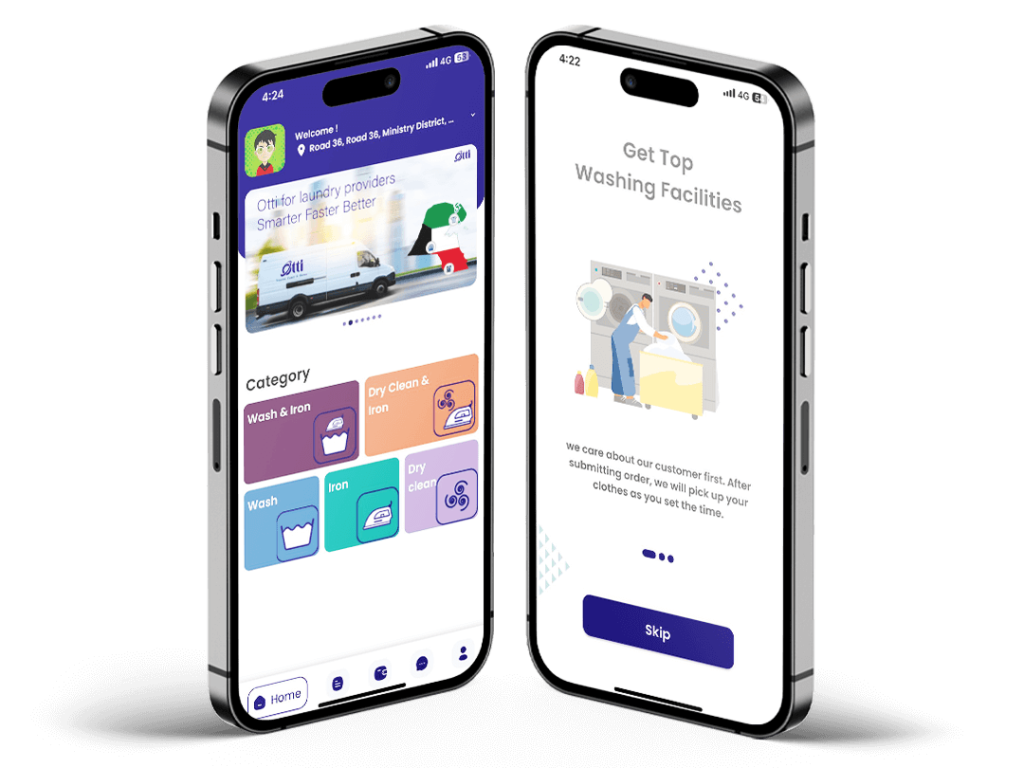
The Otti app is not a laundry and does not wash clothes itself; it connects you with partner laundries in Kuwait:
- Order at any hour: Open the Otti app around the clock and set your Kuwait address.
- Choose your laundry yourself: Compare partner laundries serving your area by services and slots, then pick one.
- Select the service per item: Pick dry cleaning for delicates or regular washing for cottons; the price shows in the app before confirmation.
- Pick a pickup slot: Choose from the selected laundry’s schedule, or use “Request Driver”.
- Doorstep collection and return: The partner laundry’s driver collects and returns your clothes, and you pay online or from your wallet.
Why a laundry network helps when your basket mixes both
Weekly loads often mix cotton shirts needing water washing with a suit or abaya where dry cleaning vs washing matters.
Because the Otti app connects partner laundries rather than operating as one shop, searching for a laundry near me in the Otti app lets you choose a laundry serving your area in Kuwait with no commitment to one provider.
Tips before collection and after your clothes return
- Group items clearly: Separate dry-clean pieces from regular wash loads and keep care labels attached.
- Check every pocket: Remove pens, tissues and receipts from suit jackets and dishdasha pockets.
- Blot spills without rubbing or heat: Dab marks gently with a white cloth and never iron over an uncleaned stain.
- Air garments before storing: Remove plastic covers after dry cleaning, air garments indoors, and use wide wooden hangers.
Cost of dry cleaning vs regular washing in Kuwait
Pricing reflects dry cleaning vs washing differences: solvent cleaning and tailored finishing differ from regular washing, and rates depend on garment type and service.
In the Otti app, the exact price appears before you confirm your order once you select your laundry and items.
💜 Wallet in the Otti app
When you top up your wallet in the Otti app, you get a 25% extra bonus, and you can use your balance to order from any laundry in the app with no commitment to just one.
Frequently asked questions on fabric care and cleaning
How do I know if something is dry clean only?
Check the woven care label inside the collar or side seam first. If it states Dry Clean Only or shows a circle symbol alongside a crossed-out washtub, avoid water washing altogether. Structured wool suits, silk blouses, pleated garments, bishts and heavily beaded abayas also require professional dry cleaning.
Can a cotton dishdasha go in the washing machine?
Yes, a standard summer dishdasha made from cotton or a durable cotton blend can go in the washing machine using cool or warm water and mild detergent. Separate white dishdashas from coloured clothes to prevent dye transfer, check the label temperature, and hang promptly to reduce creasing.
Does a wool winter dishdasha need dry cleaning?
In most cases, yes. A winter dishdasha tailored from pure wool or a wool-cashmere blend should be dry cleaned because water and drum agitation cause wool fibres to shrink, mat and distort around the collar and cuffs. Only machine-wash it if its sewn care label explicitly permits water.
Does washing ruin wool?
Regular machine washing damages most untreated wool garments. Water causes microscopic scales along each wool fibre to open up, and tumbling locks those scales together in a process called felting. Trousers, jumpers and wool coats come out noticeably smaller, stiffer and misshapen compared with solvent dry cleaning.
What does the circle symbol on a care label mean?
A circle on a garment care label is the international symbol for professional dry cleaning. A plain circle permits standard dry cleaning, while a letter such as P or F inside the circle tells the cleaner which solvent is safe. A circle crossed out with an X warns against dry cleaning.
What does Machine Wash on a care label mean?
Machine Wash on a care label means the fabric is safe to clean with water and detergent inside a regular washing machine rather than needing dry cleaning. Look for extra instructions beside it, such as Cold, 30°C or Gentle Cycle, which indicate the safest water temperature and spin setting.
Does a white work shirt need dry cleaning?
Most white cotton or poly-cotton office shirts are better suited to regular water washing and crisp pressing than dry cleaning, because water dissolves sweat and collar grime far more effectively than solvent. Only choose dry cleaning if the shirt is made from silk or its label specifies dry cleaning.
What if a garment has no care label?
If the care label has been cut out or faded, judge by fabric and structure. Tailored jackets with shoulder padding, woollens, silk, velvet and embroidered or beaded pieces are safest in dry cleaning. Plain everyday cotton garments usually handle a cool, gentle water wash after testing an inside seam.
Which costs more, dry cleaning or regular washing?
Rates vary depending on the garment type, fabric structure and whether it requires solvent dry cleaning or regular water washing and pressing. When ordering through the Otti app, you pick your preferred partner laundry and select your items, and the exact price appears clearly before you confirm your order.
Not sure what your garment needs? Download the app and choose the right service.
Have a question? Message us on WhatsApp at +965 5656 0404